Why drain and sewer work is different in Putnam
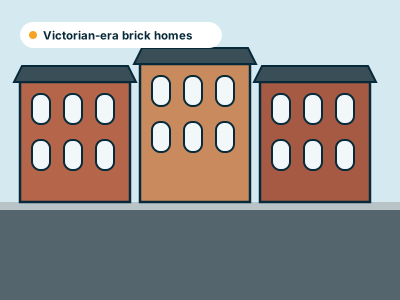
Putnam is one of Zanesville's oldest neighborhoods, and its plumbing reflects that. Once a separate town across the Muskingum River from downtown, Putnam was annexed by Zanesville in 1872. Its core is now the Putnam Historic District, listed on the National Register of Historic Places in 1975: about twelve blocks and 168 main structures, most of the nineteenth-century buildings dating from 1865 to 1900, with the rest largely built in the first two decades of the twentieth century.
Houses that old were built before indoor plumbing was standard, so their drain systems were added, extended and repaired over many decades. It is common to find a mix of materials in one house: cast iron stacks, galvanized branch lines from a mid-century update, PVC from a recent bathroom remodel, and an original clay or cast iron lateral still carrying everything to the street.
That patchwork is why clogs in Putnam often come back. A cleaning clears the blockage, but the joint, sag or scaled section that caught it is still there. A camera inspection is often the step that finally explains a line that has been cleaned several times. For the citywide picture, see the Zanesville drain cleaning homepage.
The street trees that make Putnam pleasant to walk are part of the story too. Large trees planted generations ago have roots that reach the laterals under front yards, where clay joints give them an easy way in.
Top services Putnam homeowners need
1. Main line cleaning for root clogs
Root intrusion at clay joints is the classic Putnam backup: the basement floor drain gurgles, then fills, often a year or so after the last cleaning. A cable with a root-cutting blade clears it. Read more in the drain cleaning guide.
2. Camera inspection before a repair
With so many layers of past work, it is worth seeing the line before deciding on a fix. The camera shows where old pipe meets new and whether a past repair is the weak point.
3. Spot repair or lining that spares the brick and trees
Owners in a historic district often want to avoid trenching through brick walks, steps and established trees. Trenchless sewer repair can rebuild a lateral through small access points when the pipe still holds its shape.
4. Cast iron stack and branch cleaning
Old cast iron inside the house scales from within, narrowing kitchen and bathroom lines. Cleaning, and in some cases jetting matched to the pipe's condition, restores flow without opening walls.
Old drain lines acting up in Putnam? Talk to a local provider.
Renovations, storms and old laterals
Many Putnam homes have been carefully renovated, sometimes more than once. A new kitchen or an added bathroom sends more water into a lateral that may be original to the house. If the line already has roots or an offset joint, the extra flow can turn an occasional slow drain into regular backups. Scoping the lateral before a remodel is a small cost compared with opening a finished basement floor later.
Storms matter too. The City of Zanesville describes its system as combined, carrying storm water along with wastewater, and it is working on a Long Term Control Plan with the EPA to reduce overflows. During heavy rain, the main carries more flow, and a basement floor drain on a partly blocked lateral is often the first place that shows it.
Older homes also tend to have more than one sewer connection point from past additions or carriage houses, and occasionally an unused line that was never properly capped. A camera can identify these, which matters if you are planning repairs or a new bathroom.
A Putnam homeowner's drain checklist
- Find the main cleanout in the basement, and note if it is an old cast iron plug that may be hard to open.
- Ask past owners or your inspection report whether the lateral was ever replaced.
- Note any large trees between the house and the street; they are the most likely root source.
- Keep grease out of old kitchen lines, which are often galvanized or cast iron and narrow quickly.
- If you are renovating, ask for the lateral to be scoped before new bathrooms add flow to it.
Nearby areas
Putnam sits across the Muskingum River from downtown Zanesville, close to the Y-Bridge. Nearby, the village of South Zanesville has newer housing on average but many homes from before 1980, and the East End has its own wrinkle: parts of it are served by city-maintained grinder pump stations. For a list of all areas, see service areas.
Putnam drain and sewer FAQ
Are sewer laterals in Putnam usually original?
Many are, or are partly original with later repairs. It varies house by house, which is why a camera inspection is the reliable way to know what is under your yard.
Does living in a historic district limit sewer repairs?
Underground sewer work is mostly invisible once complete, but surface features such as brick walks may need to be restored. Ask the provider about restoration and any permits before work begins.
Why does my Putnam basement floor drain back up after rain?
Zanesville's combined sewer carries storm water as well as wastewater, so rain raises flow in the main. A lateral that is already partly blocked by roots or debris is more likely to back up during a storm.
Is trenchless repair possible on old clay lines?
Often, if the pipe is still round and has no deep sags. Lining creates a jointless pipe inside the old one. A camera inspection tells whether your line is a candidate.
Who maintains the sewer under the street in Putnam?
The City of Zanesville maintains the sewer main. The homeowner is responsible for the lateral that runs from the main to the house.