What is a sewer camera inspection?
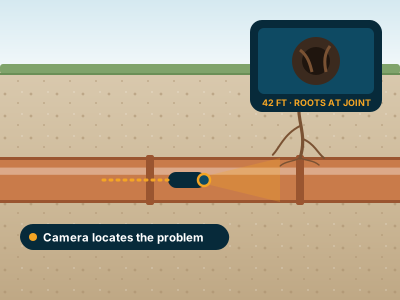
A sewer camera inspection sends a waterproof camera on a flexible push cable through a drain or sewer line and records video of the inside of the pipe. The operator watches a monitor in real time while a counter on the cable shows how far the camera has traveled.
Many camera heads include a small transmitter called a sonde. A handheld locator on the surface picks up its signal, so the technician can mark the spot on the lawn or floor above any problem and estimate its depth. That turns a vague diagnosis into a precise location.
The inspection itself does not fix anything. It tells you what kind of fix is worth paying for, which is why it is often paired with drain cleaning or recommended before a sewer line repair. Many callers start from our local drain cleaning help page and end up here after a clog comes back.
How a sewer camera inspection works
Access
The camera enters through a cleanout, a removed toilet or occasionally a roof vent. A basement or exterior cleanout gives the clearest path to the lateral.
The push
The cable is fed by hand while the camera's light illuminates the pipe. The operator watches for color changes, cracks, root intrusion, standing water, offsets and the transition between materials.
Measurement and location
The footage counter records distance to each finding. The sonde is located from above to mark position and depth, which matters for any excavation.
Recording
Most modern systems record video and can add notes or photos at key points. Ask for a copy; it is your record of the line's condition.
Clearing first
A camera cannot see through standing sewage or past a solid clog. If the line is backed up, it is usually cleaned first, then inspected.
8 reasons to get a camera inspection
- The main line has clogged more than once in the past year.
- You are buying an older home and want to know the lateral's condition before closing.
- Someone recommended replacement and you want to see the evidence.
- Roots were pulled out on the cable during a cleaning.
- Water backs up into the basement after rain.
- A soggy or sunken spot appears over the line in the yard.
- You are planning a renovation or new bathroom that will add flow to the line.
- A previous repair needs to be checked.
Want to see what is in your sewer line? Ask a local provider about a camera inspection.
What the camera usually finds in Zanesville lines
With about four in ten Zanesville homes built in 1939 or earlier, camera footage often reads like a history of the house.
- Root intrusion at clay joints, from hair-fine strands to masses that fill the pipe.
- Offset joints, where one section has shifted and left a lip that catches debris.
- Bellies, low spots that hold standing water and solids.
- Cracks and fractures in clay tile, from hairline to broken pieces.
- Scale and corrosion in cast iron, sometimes with a split along the bottom.
- Material transitions, where an earlier repair joined new pipe to old.
- Deformed fiber pipe in some mid-century homes.
When a camera inspection saves money
An inspection costs money, so it is fair to ask when it pays for itself. In practice it does in three situations.
Before a big repair decision. If someone recommends replacing a lateral, the footage is your evidence. It shows whether the problem is one bad joint, which a spot repair can fix, or failure along the whole line. A few minutes of video can be the difference between a targeted repair and a full replacement.
After the second clog. One clog in years is usually just a clog. A second one in the same line within months means something in the pipe is catching debris. Cleaning it a third and fourth time without looking is the expensive path.
Before buying an older home. Many Zanesville houses still drain through the lateral they were built with. A general home inspection rarely includes the inside of that pipe, and a buyer who finds a failing line after closing pays for it alone.
There are also times it adds little, such as a single hair clog in a bathroom sink. A good provider will tell you which situation you are in.
What you can do to prepare
- Locate the cleanout and clear space around it.
- Avoid heavy water use just before the visit so the line is not full.
- Write down the history: past clogs, cleanings and any repairs you know of.
- Ask for a recording and a written note of distances to each finding.
Want to see what is in your sewer line? Ask a local provider about a camera inspection.
What happens during the inspection
- History and access. The technician asks about symptoms and opens the cleanout.
- Clear if necessary. A backed-up line is cleaned first so the camera can see.
- Run the camera from the access point toward the city main.
- Locate findings. Problems are marked from the surface with a locator.
- Review together. You watch the key footage and hear what each finding means.
- Recommendations. Options range from no action to maintenance cleaning, repair or replacement.
How to read a sewer camera report
Camera reports use a handful of terms over and over. Knowing them makes it easier to follow the footage and judge a recommendation.
- Root intrusion. Roots entering at a joint or crack. Reports often note whether they are fine strands or a mass, and how much of the pipe they block.
- Offset or separated joint. Two sections no longer line up. A small offset may only catch paper; a large one can stop a cable and let soil in.
- Belly or sag. A low section where water stands. The camera lens dips under water or the image shows a pool. Bellies collect solids and are the reason some lines clog no matter how often they are cleaned.
- Crack or fracture. From hairline cracks to broken pipe with missing pieces. Location and length matter more than the label.
- Infiltration. Groundwater or soil visibly entering the pipe, a sign of a gap that will widen.
- Scale or tuberculation. Rough corrosion deposits in cast iron that narrow the pipe.
- Transition. The point where one material meets another, often the site of an earlier repair.
Every finding should come with a distance from the access point. If a report says only that the line is bad without distances or footage, ask to see the video and have each problem pointed out. That is also what lets a second provider give you a meaningful second opinion.
What affects the cost of a camera inspection?
Camera inspections are usually a set service, but these factors can change the price.
| Factor | Effect on the job |
|---|---|
| Line condition | A backed-up line needs cleaning before it can be inspected. |
| Access point | A cleanout is simpler than pulling a toilet. |
| Line length | Long laterals take more time to inspect and locate. |
| Recording and report | A copy of the video or a written report may be included or extra. |
| Bundling | Some providers price inspection together with cleaning or repair. |
Is a camera inspection ever urgent?
The inspection itself is rarely an emergency. The backup that leads to it can be. If sewage is coming into the house, the line needs to be cleared first. Once it flows, an inspection is the best way to make sure it does not happen again next month. See the emergency drain service page for the first steps.
Sewer Camera Inspection FAQs for Zanesville homeowners
How long does a sewer camera inspection take?
Many inspections take about an hour on a clear line with good access. Cleaning a blocked line first, a long lateral or a difficult access point adds time.
Can I watch the inspection?
Usually, yes. Most technicians are happy to show you the monitor as the camera moves, and watching helps you understand any recommendation that follows.
Will the camera show who is responsible, me or the city?
The footage distance shows where a problem sits along the line. In Zanesville the city maintains the main and the homeowner the lateral, so a problem near the main connection may be worth discussing with the city.
Should I get a camera inspection before buying a house?
For older homes, it is a sensible step. A sewer lateral problem can be expensive and is not always visible during a general inspection.
Can a camera find a leak in my water line?
Sewer cameras inspect drain and sewer lines. Pressurized water supply lines use different leak detection methods.
Do I get a copy of the video?
Many providers can give you a copy or a link. Ask before the inspection so it is part of the service.
Related services and areas
Camera inspections are especially useful in the century-old homes of Putnam and when buying in South Zanesville. See all service areas.